
SunExpress Mollymawk Pilot Selection Exam Guide
Mollymawk at a Glance
Location & Duration
Assessments take place in Turkey. The full recruitment process takes 3-5 days minimum. Plan travel and rest accordingly. (Last verified: February 2026)
What is Mollymawk and What Does It Measure?
In SunExpress communications, "Mollymawk" refers to a psychometric testing stage used in cockpit recruitment to determine a candidate's suitability for pilot duties. Coverage explicitly includes physics, math, spatial memory, working memory, and time sharing.
At the provider level, Mollymawk is positioned as a professional psychometric test battery for aviation and other "dynamic and fast-paced" human–machine roles, with stated quality claims (objectivity, reliability, validity) and a standardized supervised exam that produces a certificate.
Why These Tests? The EASA/CRM Framework Modern pilot selection follows EASA (European Union Aviation Safety Agency) competency-based guidelines. Aptitude tests like Mollymawk are designed to assess CRM (Crew Resource Management) competencies—specifically workload management, situational awareness, and decision-making under pressure. These aren't arbitrary hurdles; they map directly to skills that prevent accidents. Airlines use psychometric data alongside simulator and interview performance to build a complete competency profile.
"Treat Mollymawk like a performance exam: speed + accuracy + fatigue management."
What's Inside the Mollymawk Battery?
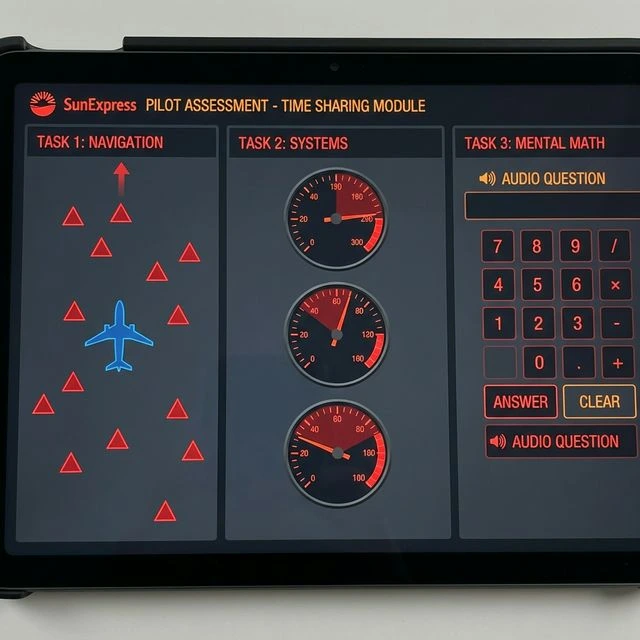
Time Sharing
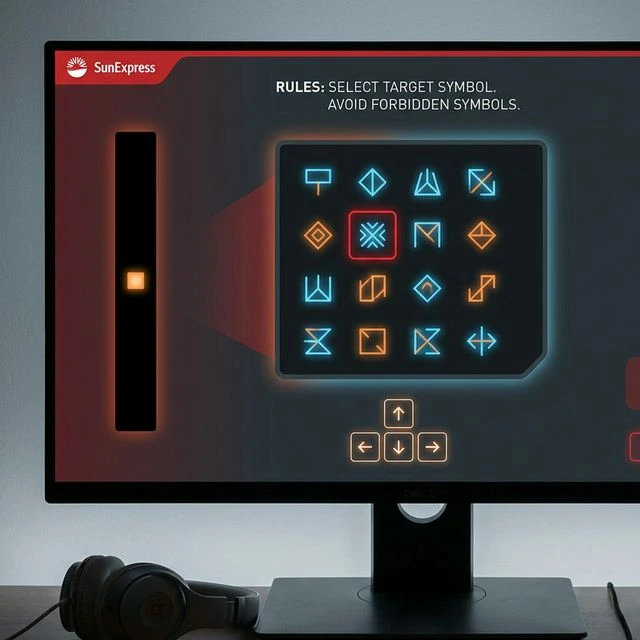
Working Memory
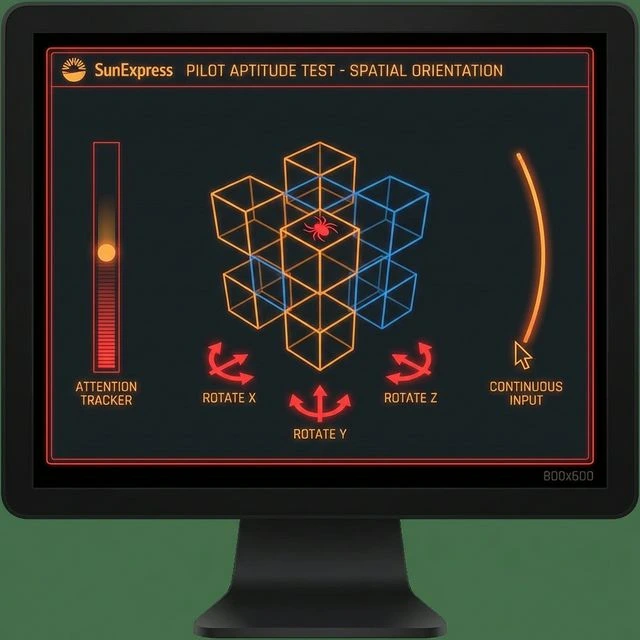
Spatial Orientation
Math & Science

English (if included)
Self Description
What Are the Core Aptitude Modules?
⏱️ Time Sharing (Most Critical)
The provider explicitly describes time sharing as coordinated task management via rapid attention switching (not literal simultaneity), with prioritization as a prerequisite.
- Navigation: Control aircraft with arrow keys, maintain center position, avoid approaching obstacles
- Monitoring: Watch 4 instrument gauges, press C-V-B-N when needles enter red zones
- Auditory: Listen to spoken math questions and answer via numeric keypad
- Scoring: Improves with anticipation, planning, and appropriate control inputs
🧠 Working Memory
An "executive and attentional" function. Pilots must rapidly integrate and act on visual and auditory information.
- Task: Rule-based choice reactions with both visual and acoustical inputs
- Rules change each round — adapt quickly or errors compound
- Dual task: Keep sliding square from reaching bottom while selecting symbols
🧭 Spatial Orientation
The ability to visualize positions/objects in 2D/3D, change perspectives, and rotate/manipulate mental representations.
- Task: 3D cube formations with a spider on one face
- Commands: Follow spoken instructions from spider's perspective
- Distraction: Left hand keeps ball up, right hand maintains mouse movement
Where Does Mollymawk Fit in the Recruitment Process?
Documents
License Check
English
Proficiency Test
Mollymawk
Psychometric Test
Simulator
Boeing 737NG
Interview
Panel (~1.5h)
Final Docs
Work Permit*
- For non-Turkish/non-EU candidates: Final document verification and work permit processing is required after successful interview. This step can add several weeks to the overall timeline.
What Each Stage Does
| Stage | What Happens | Key Focus |
|---|---|---|
| Document Check | License/certification verification | Eligibility |
| English Test | Language proficiency assessment | Communication |
| Mollymawk | 3-hour supervised psychometric battery | Cognitive aptitude |
| Simulator | Full-motion 737NG with company captain | Technical skills |
| Panel Interview | HR + Captain + Flight Psychologist (English) | Competency & fit |
How Does Scoring and Retesting Work?
What the Certificate Shows
Certificate results are based only on raw scores recorded during the supervised exam session. Raw scores are converted into percentages, percentiles, or standardized values—raw scores themselves are not disclosed.
- Skills tests (Math, English): Reported as percentage correct
- Aptitude tests (Time Sharing, etc.): Reported as percentile (norm-referenced)
- Training scores have zero effect on the official certificate—only the supervised exam counts
⚠️ Retest Constraints
Mollymawk publishes strict rules: minimum 7 days between exams, and maximum 2 exam attempts in any 24-month period. Violations can lead to deletion of certificates/accounts without compensation.
Each attempt requires a new test package. Ordering a new package can erase remaining training runs from the previous package—plan carefully.
Why "Cut Scores" Are Hard to Research SunExpress confirms that candidates who "acquire the required scores" move on, but thresholds are not published. Because they vary by operator and hiring demand, the only defensible target is: aim for stable performance and high percentiles across all modules.
How Should You Prepare for Mollymawk?
Preparation works best when it treats Mollymawk as what it is: a performance battery that rewards (a) familiarity with task mechanics, (b) a repeatable strategy under time pressure, and (c) mental endurance over ~3 hours.
Build the Right Test Environment First
Hardware

Connection

Audio
Training Run Economics
A test package includes:
- 20 training runs per aptitude test
- 2 training runs per skills test
- Provider recommends: minimum 12 aptitude runs, at least 1 skills run before exam
Module-by-Module Strategy
| Module | Training Focus | Key Technique |
|---|---|---|
| Time Sharing | Priority policy → speed | Design prioritization: navigation first, then gauges, math when spare capacity |
| Working Memory | Rules → speed → error recovery | Eliminate "rule confusion" errors first, then push speed |
| Spatial Orientation | Transformations, not tricks | Practice mental rotation until automatic, then add time pressure |
| Math/Physics | Fast fundamentals | No calculator—build habits assuming writing allowed but time is tight |
4-Week Preparation Timeline
| Week | Focus | Daily Time | Goal |
|---|---|---|---|
| 1 | Exploration | 30 min | Learn task mechanics, ignore speed. Complete 4-5 training runs per module. |
| 2 | Baseline | 45 min | Establish score band, identify weak areas. Focus on eliminating errors. |
| 3 | Targeted Practice | 45 min | 70% time on weak modules. Build consistency and speed. |
| 4 | Simulation | 60-90 min | Full exam-mode rehearsals. Practice fatigue management over 3 hours. |
What Should You Bring on Exam Day?
Bring Photo ID

Clear Desk
No Food Inside
Test Package vs. Exam Slot
If your invitation requires you to obtain a test package yourself, remember: a test package does NOT include an exam slot. Public exam centers may charge separately for the slot.
Frequently Asked Questions
What is the SunExpress Mollymawk exam and what does it measure?
How long is the Mollymawk session?
Is this mainly a knowledge test or performance test?
Can I practice unlimited times?
What are the retest rules?
What happens after I pass Mollymawk?
Where does the assessment take place?
Ready to Prepare?
Practice the exact Mollymawk modules with realistic simulations. Time Sharing, Working Memory, Spatial Orientation — all in one app.
Sources & References
- SunExpress Careers Portal - sunexpress.com/en/careersAccessed: February 2026
- EASA Part-FCL Regulations - easa.europa.eu/en/regulationsCompetency-based pilot selection standards
- AvioTest Preparation Simulator - aviotest.org/en/mollymawk/Web-based psychometric test simulator for Mollymawk modules
- Aviation Psychometric Test Providers - Official test battery specifications and module descriptions
- Candidate Experience Reports - Verified testimonials from pilots who completed SunExpress selection (2024-2026)