
Recruitment 2026
Turkish Airlines Pilot Recruitment
The most comprehensive preparation platform for the THY Pilot Candidate evaluation process. Master the PACE exam, CRM assessment, and Technical interviews with our specialized training modules.
The most comprehensive preparation platform for the THY Pilot Candidate evaluation process. Master the PACE exam, CRM assessment, and Technical interviews with our specialized training modules.

THY pilot training program, duration, flight schools, and cost details.
Turkish Airlines publishes a recruitment notice for 'Cadet Pilot Candidates' every year. Candidates who successfully complete the evaluation process become eligible to join the company's Pilot Cadet Program.
Approximately 500-800 candidates are employed and start the training process each year. Training is primarily conducted at the Turkish Airlines Flight Academy (TAFA) located in Aydın. When TAFA's capacity is insufficient, candidates may be directed to partner flight schools such as AYJET, AFA, ERAH, and THK.
Within the scope of the Integrated ATPL program, at least 750 hours of theoretical training and 200 hours of flight training are provided. This training process takes an average of 15–16 months. Upon completion, candidates are entitled to receive a valid pilot license. Following graduation, candidates undergo type rating training for either Airbus or Boeing aircraft. This training is mostly conducted on narrow-body Airbus A320 or Boeing 737 aircraft and lasts about 6 months, usually within the THY Flight Training Department.
The total cost of basic and type rating training, which lasts approximately 2 years, varies between 120,000 or 170,000 Euros depending on the contract type. This amount is repaid through deductions from the candidates' salaries over a period of approximately 10 years after they start flying as First Officers. The monthly deduction rate is arranged not to exceed 25% of the salary.
The pilot cadet candidacy process from application to medical check.
The cadet pilot candidacy process consists of five main stages meticulously carried out by Turkish Airlines.
All evaluation steps from application to flight fitness control.
The evaluation process consists of the following steps:
These five stages also reveal the core competencies required in a pilot candidate:
Waiting periods between stages may vary according to the number of applicants and planning. Usually, intervals of a few weeks occur between steps, though these periods may extend during high-volume terms. Including fleet assignment and contract signing, the total duration from the first day of application to the final stage averages a few months.
The candidate's evaluation process begins from the moment of application. All exam and interview stages are conducted within the Turkish Airlines Flight Training Department.
Online exam procedures, content, and success criteria.
Candidates who submit a valid English language certificate at the application stage are exempted from the English exam and proceed directly to the PACE stage.
Candidates who cannot provide a valid language certificate during or after the application participate in the online English exam. Successful candidates continue with the PACE Test. However, since this exam only covers Reading and Listening sections, it does not include Writing and Speaking skills and therefore does not replace an official language certificate.
Candidates who fail the exam are requested to submit their official certificate within a two-month period from the exam date. If the document is provided within the specified time, the process continues with the PACE stage; otherwise, the application is terminated, and the candidate must reapply in the next notice period.
The exam consists of 32 multiple-choice questions and lasts approximately 40 minutes. The content categories are as follows:
General information about the preparation process, exam links, and assessment results.
Candidates who successfully pass the English exam or submit a valid language certificate are sent a practice link to prepare for the PACE test. There is at least a three-week preparation period between the sent study link and the actual exam date.
Candidates successful in the PACE assessment proceed to the Competency Assessment (CRM) stage.
Candidates who fail to achieve sufficient success in the test cannot continue the process for the relevant notice and must wait for the next application period. Depending on the failed modules, candidates must wait for a re-test period ranging between 3 to 6 months. Provided all application requirements are met, candidates have the right to reapply in a new notice period.
The PACE Exam is made up of 9 modules. The exam is completed in four sections, with 10-minute breaks in between.
Tutorials for PACE Modules
Review the guide for test details and all module contents.
The psychometric evaluation system implemented in recent years is called PACE. This test aims to measure candidates' technical proficiency and is conducted within the THY Flight Training Department. The total duration is approximately 5–6 hours. This test consists of 2 knowledge and 7 ability modules.
Ability modules are designed to evaluate the core cognitive and psychomotor skills required for a pilot. In this context, critical competencies such as spatial perception, memory, psychomotor, and attention coordination are measured.
The main modules in the evaluation process are:
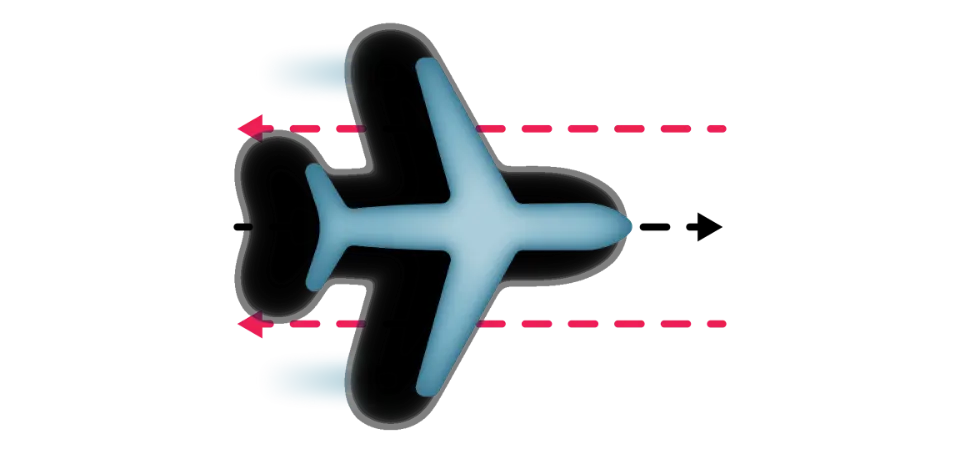
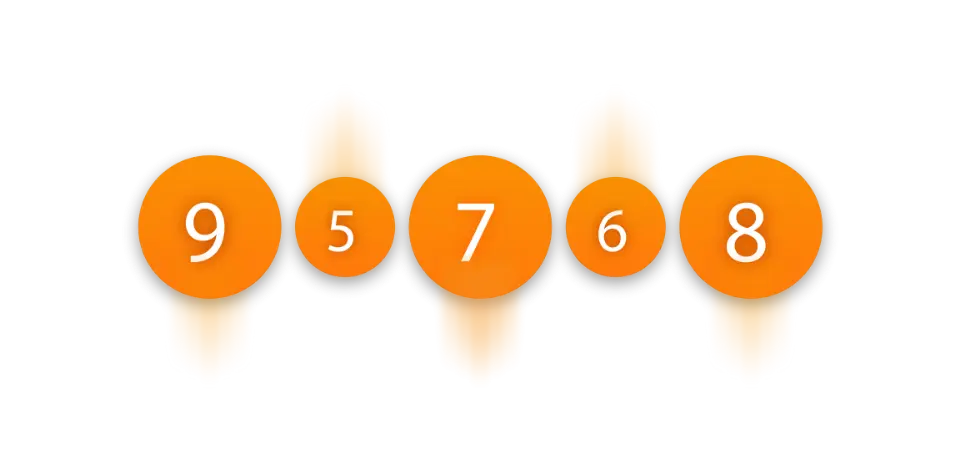
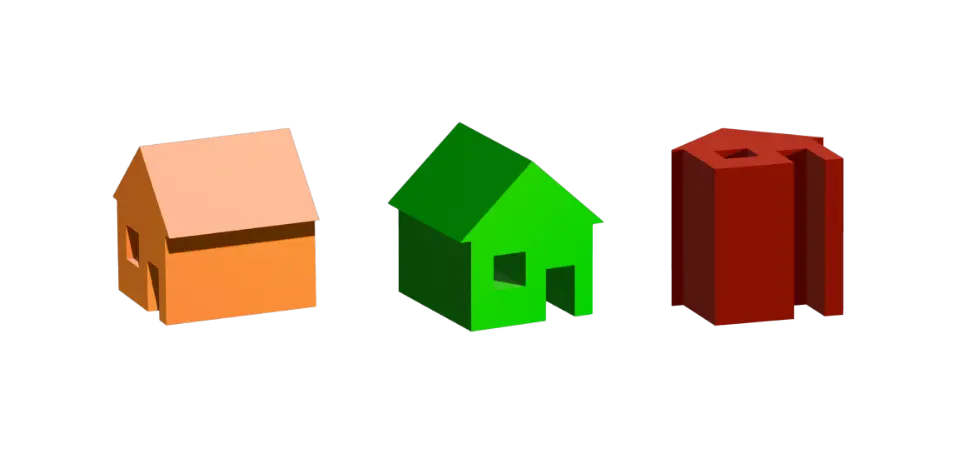
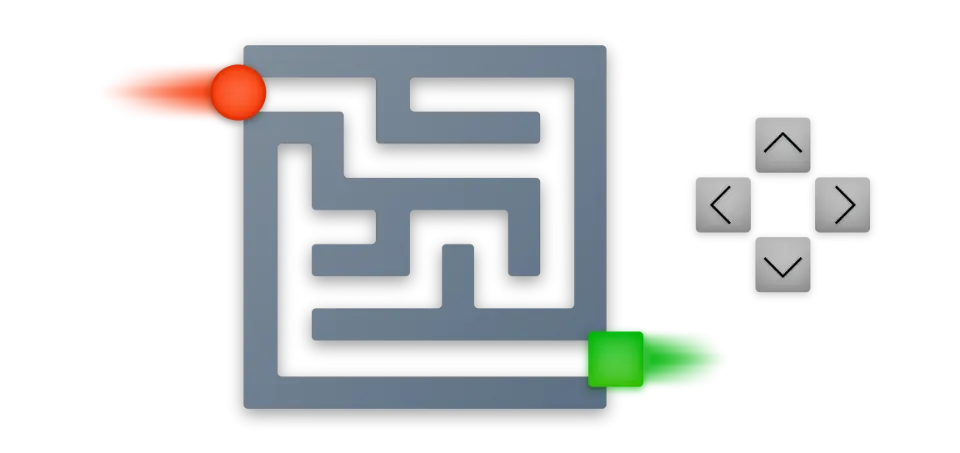


Knowledge modules are implemented to evaluate candidates' basic levels in Mathematics and Physics. These modules aim to measure analytical thinking skills and the level of understanding of fundamental scientific information.
The main modules in the evaluation process are:

Detailed information about basic mathematics knowledge level and subject headings.
This module is applied to measure candidates' basic Mathematics knowledge. The assessment consists of 30 questions with an allocated time of 30 minutes. The evaluation is structured to cover basic mathematical operations, numerical reasoning, and problem-solving skills.
Questions are prepared in a multiple-choice format, each containing four options. When compared to DLR Mathematics, the PACE Math module has a generally similar structure in terms of scope and question types. However, the PACE Mathematics assessment has a broader content range in some subjects.
Subject headings are structured to measure candidates' basic mathematical knowledge and problem-solving skills.
Detailed information about basic physics knowledge level and subject areas.
This module is applied to measure candidates' basic Physics knowledge. The assessment consists of 30 questions with a duration of 30 minutes. Questions are prepared in multiple-choice format with four options each.
These subject headings are structured to measure candidates' basic physics knowledge and conceptual proficiency.
Exam procedures, entry operations, and module sequence.
Prior to the exam, necessary information regarding the application is shared in an information email sent by Turkish Airlines. There is no specific dress code requirement for the psychometric test.
At the entrance of the building where the exam is held, an identity document must be presented to security. During the transition to the test area, identity control is performed again by the exam official.
Details on module pairings, codes, and performance balance.
M: Mathematics
F: Physics
B: Memory
U: Spatial Perception
D: Attention
P: Psychomotor Coordination
Some modules in the table are evaluated together to measure the same competency. To be considered successful in these areas, a balanced performance across the relevant modules is expected. If sufficient balance is not achieved, the evaluation result may be negative.
Information about performance targets and success criteria.
Practice can be done through the application, and instant feedback is provided during study.
Therefore, in the preparation process, candidates should aim to bring their performance to a balanced and sufficient level in all stages. Maintaining consistent success at high levels in each module is vital for the evaluation process.
Assessment phase where social and behavioral skills are measured.
Candidates who pass the PACE test are invited to the Competency Assessment (CRM) phase. Scheduling between the two stages is generally planned with at least a two-week interval.
Competency Assessment is conducted at the THY Flight Training Department facilities on the designated date and lasts an average of three hours. Successful candidates proceed to the HR and Technical Interview.
Candidates who have not yet submitted a valid language certificate are granted an additional 1-month period. Interview scheduling occurs once the language certificate is uploaded to the designated field in the application system.
Applications of candidates who do not submit the language certificate within the 1-month period are terminated. This does not lead to a loss of rights; candidates can reapply for new notices after obtaining their certificates and join the planning again by stating their CRM result.
The designated re-test waiting period for Competency Assessment failure is 3 months. Candidates can reapply to new notices if all requirements are met.
CRM (Crew Resource Management) refers to the correct use of all human and operational resources in the crew for a safe flight. In this stage, the candidates' potential in the following core components is evaluated:
Six candidates perform various tasks under instructions accompanied by expert academics. Skills in communication, teamwork, emotion control, and problem-solving are observed.
After the group exercise, candidates are interviewed individually. Topics include CV, motivation for piloting, group exercise performance, and competency examples from past experiences.
Details about interview content, document control, and height-weight measurement.
Candidates successful in the Competency Assessment proceed to the HR and Technical Interview, document control, and height-weight measurement stages.
Candidates without a valid language certificate at the time of CRM are granted 1 month to submit it. Scheduling follows document delivery. For those with valid certificates, at least a 2-week period is projected between CRM and the interview.
The interview lasts about 30 minutes, but the total process can take up to 3 hours including document checks and waiting times. Successful candidates are directed to the Medical Check process.
The reapplication waiting period for unsuccessful candidates is 3 months. Candidates meeting all requirements can reapply for new notices.
Documents requested in the interview invitation email are collected and checked for compliance by Human Resources.
In measurements performed with digital devices, the Body Mass Index (BMI) is expected to be in the range of 20–30.
BMI = Weight / Height²
Example: 76 kg / 1.78m² ≈ 24.0
Conducted by two HR officials and one Captain Pilot in a mix of Turkish and English. It focuses on:
Waiting periods in case of failure, module-based rules, and reapplication details.
In case of failure in the PACE stage, candidates cannot continue the process for that notice and must wait for subsequent periods. Candidates can reapply for new notices provided all requirements are met.
Candidates can reapply even before the designated re-test waiting period ends. When the re-test period concludes, the stage where the candidate was eliminated is rescheduled by Turkish Airlines.
Important: If a candidate fails the same evaluation stage twice, they are no longer eligible to apply for the cadet pilot program.
The waiting period for retesting under the PACE assessment varies depending on the modules failed, and is set at either 3 or 6 months from the exam date. Modules failed are communicated to candidates via letter codes.
If failure occurs only in knowledge modules (M, F), the candidate retakes the exam at least 3 months later only for the failed module(s).
Note: Failure in the Attention (D) module indicates that Sustained Attention and Cognitive Agility results did not sufficiently compensate for each other.
If any ability module (B, U, D, P) is failed, the entire exam, including both knowledge and ability modules, must be retaken after at least 6 months.
The candidate is re-evaluated only for Sustained Attention / Cognitive Agility (D). Waiting period: 3 months
The re-evaluation only covers Audio Visual Memory / Verbal Memory: Digit Span (B) and Sustained Attention / Cognitive Agility (D). Waiting period: 3 months
The candidate's entire psychometric evaluation process (all knowledge and ability modules) is repeated. Waiting period: 6 months
This page covers the Turkish Airlines pilot candidate evaluation process, including the PACE psychometric exam, CRM assessment, English proficiency exam, HR and technical interview, and retest process.
Yes. The page includes a full process overview, from application to medical check, so candidates can understand the main steps of the Turkish Airlines cadet journey.
Yes. The page includes information about the PACE psychometric exam, preparation process, exam links, assessment results, module pairings, target scores, and exam day procedures.
Yes. The page includes sections about the Competency Assessment (CRM) and the HR and Technical Interview, including social and behavioral assessment, document control, and height-weight measurement details.
Yes. The page includes a retest section covering waiting periods after failure, module-based rules, and reapplication details.